

Quick answer
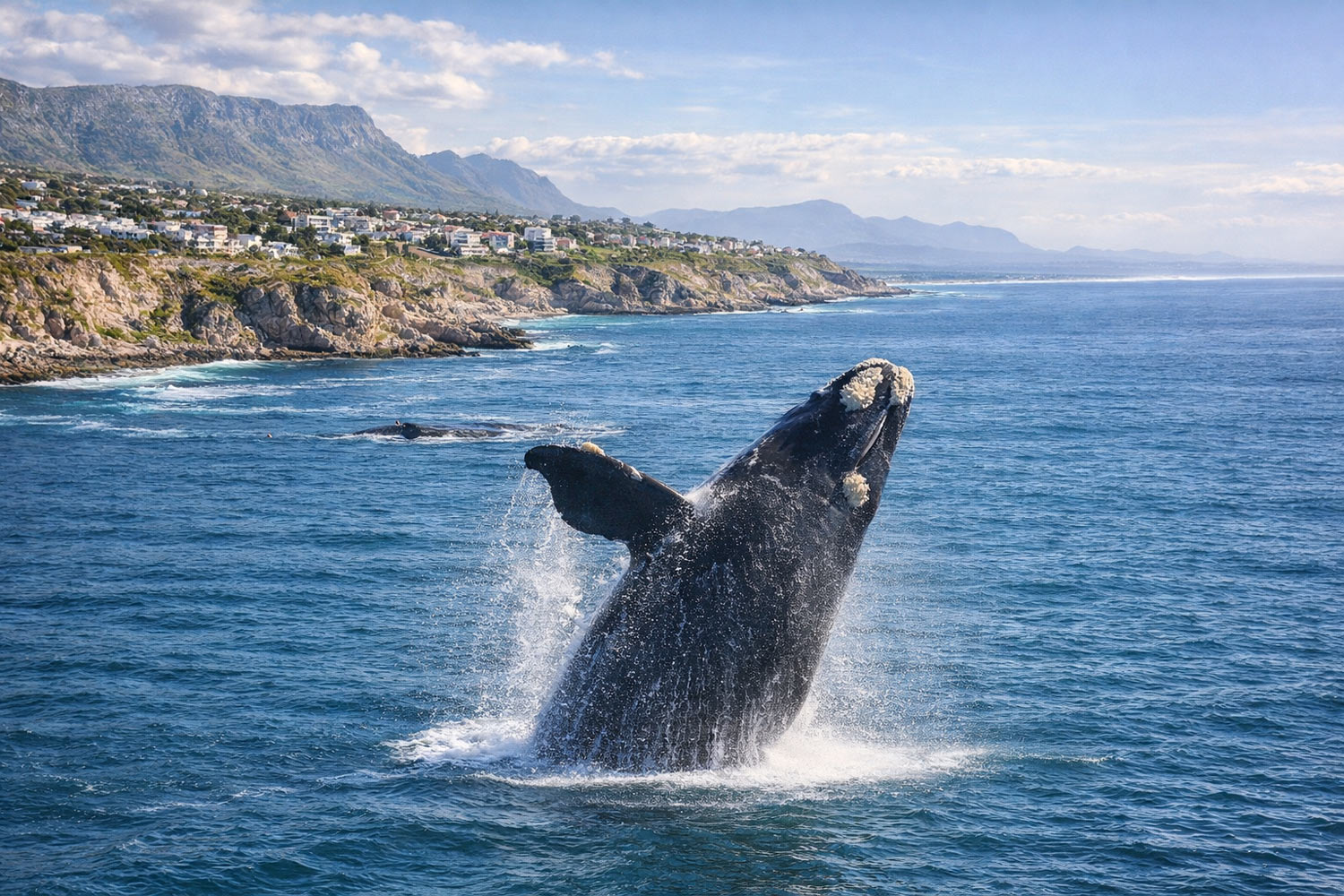
Whales come to Hermanus because Walker Bay and the surrounding coastal shelf offer sheltered, shallow waters ideal for calving and nursing, combined with consistent upwelling currents that bring nutrients close to shore. Southern right whales migrate here annually from June to December, choosing the bay's protected geography over exposed Atlantic coastlines. The continental shelf narrows dramatically at Hermanus, forcing nutrient-rich cold water toward the surface and creating optimal conditions for both mothers and calves during the breeding season.
Walker Bay sits at a rare convergence point where the Agulhas Current meets the cold Benguela system, creating a thermal boundary that concentrates plankton and krill within meters of the shoreline. Southern right whales evolved to exploit exactly this kind of coastal upwelling zone—their baleen filters are designed for dense, slow-moving prey clouds rather than open-ocean hunting. The reason why whales come to Hermanus rather than neighboring bays comes down to bathymetry. The seabed here rises abruptly from 30 meters to less than 10 within a few hundred meters of the Cliff Path, forming a natural amphitheater that shelters newborn calves from swells and predators. Females return to the same calving grounds year after year, a behavior known as site fidelity, and genetic studies confirm that multiple generations of southern right whales have chosen Hermanus for over a century. The Old Harbour records whale sightings dating to the 1840s, when the town's original industry was shore-based whaling—an industry that decimated the population before international protection began in 1935. Today the species has rebounded to an estimated 4,000 individuals in South African waters, and Walker Bay remains their primary nursery. Cow-calf pairs stay close to shore for three to four months, the calves gaining up to 50 kilograms per day on milk that is 60 percent fat. The shallow water warms faster than the open ocean, reducing thermoregulatory stress on newborns, and the rocky coastline provides acoustic cover that masks their calls from passing orcas. These factors—shelter, warmth, nutrients, and safety—combine to answer why whales come to Hermanus with such predictable regularity. The same geographic features that made the town a whaling station in the 19th century now make it the only place in the world where you can watch southern right whales from a walking path, without a boat, on any clear winter morning.
“The seabed rises abruptly from 30 meters to less than 10 within a few hundred meters of the Cliff Path, forming a natural amphitheater that shelters newborn calves from swells and predators.”
Why Do Whales Come To Hermanus: Migration and Biology
Southern Right Whales undergo an extensive migration cycle to utilize the temperate coastal waters of South Africa. These biological imperatives drive their presence in the sheltered bays surrounding Hermanus.
16,000 kilometers traveled
Southern Right Whales migrate annually between their Antarctic feeding grounds and the South African coast, covering thousands of kilometers to reach warmer waters. [1]
Calving in sheltered bays
Females migrate to the shallow, protected bays of the Western Cape to give birth in waters that offer protection from predators and strong currents. [2]
Mating and social behavior
Hermanus serves as a critical site for mating and courtship rituals where whales engage in complex social interactions. [3]
Energy conservation requirements
The move to warmer waters allows calves to conserve energy, as they lack the thick blubber layer that adults use to survive in freezing Antarctic temperatures. [4]
Surface-active behavior
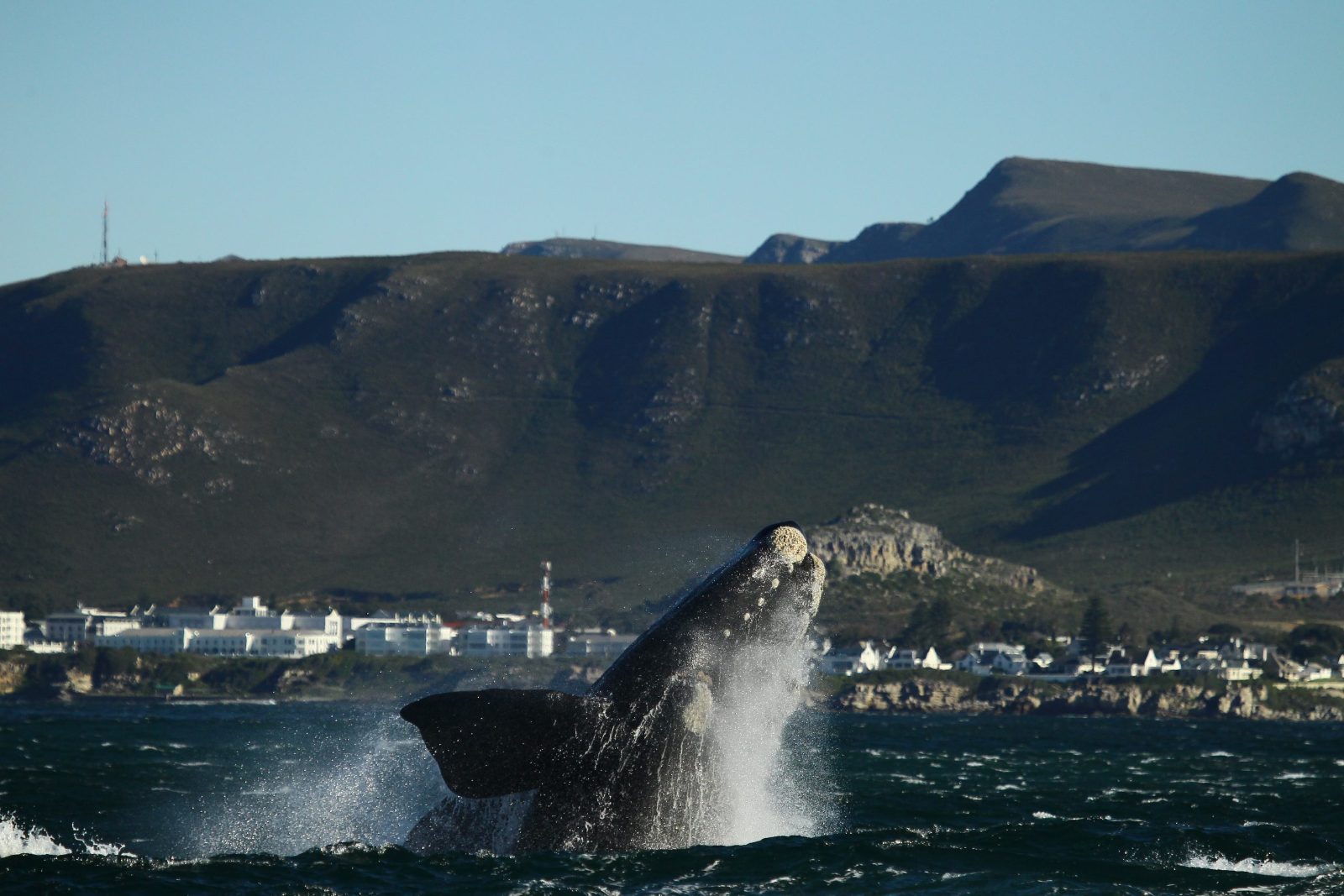
Whales frequently exhibit behaviors such as breaching and lobtailing, which are linked to social signaling and communication within the sheltered coastal environment. [5]
Protection from predators
The shallow coastal geography provides a natural refuge for calves, limiting the ability of large predators to attack them from below. [6]
Hours For Observing Why Whales Come To Hermanus
The public cliff paths in Hermanus are accessible 24 hours a day, allowing for continuous whale observation. For the best natural light and visibility, visitors should plan their arrival between 08:00 and 17:00.
| monday | 00:00–23:59 | |
|---|---|---|
| tuesday | 00:00–23:59 | |
| wednesday | 00:00–23:59 | |
| thursday | 00:00–23:59 | |
| friday | 00:00–23:59 | |
| saturday | 00:00–23:59 | |
| sunday | 00:00–23:59 |
Best Viewpoints For Why Whales Come To Hermanus
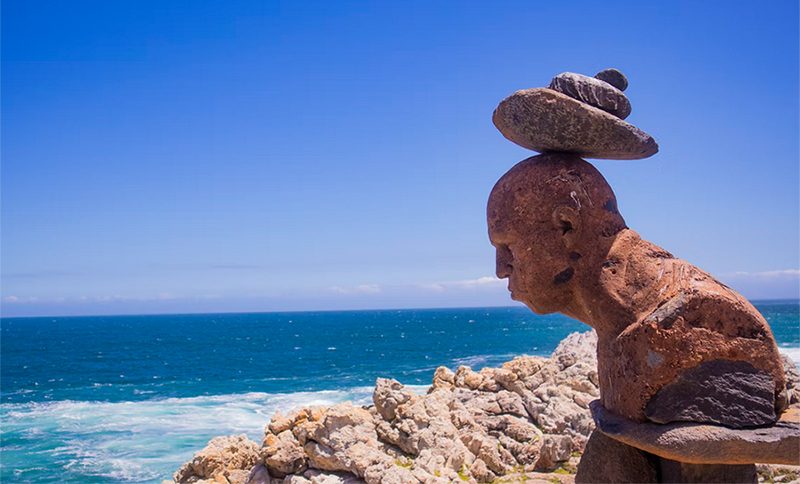
Gearing’s Point
Elevated coastal lookout offering panoramic ocean views and metal whale sculptures. Best visited during daylight hours.
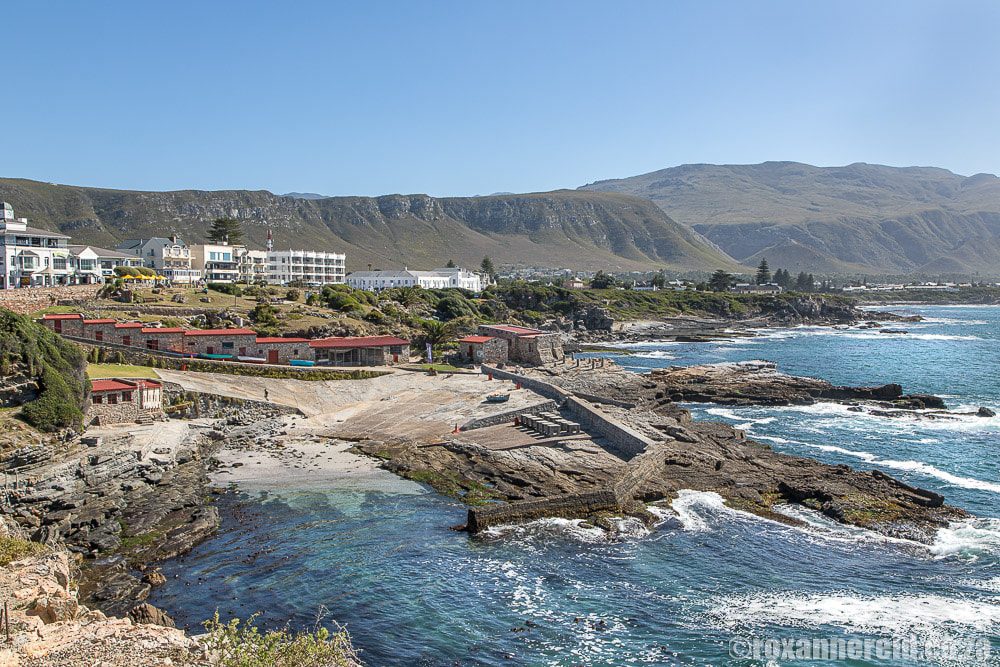
Old Harbour
Historical stone harbor walls providing low-angle perspectives of the coastline. Access is via the cliff path.
Sievers Point
Raised rocky outcrop located between the New and Old Harbours. Offers clear sightlines for whale activity.
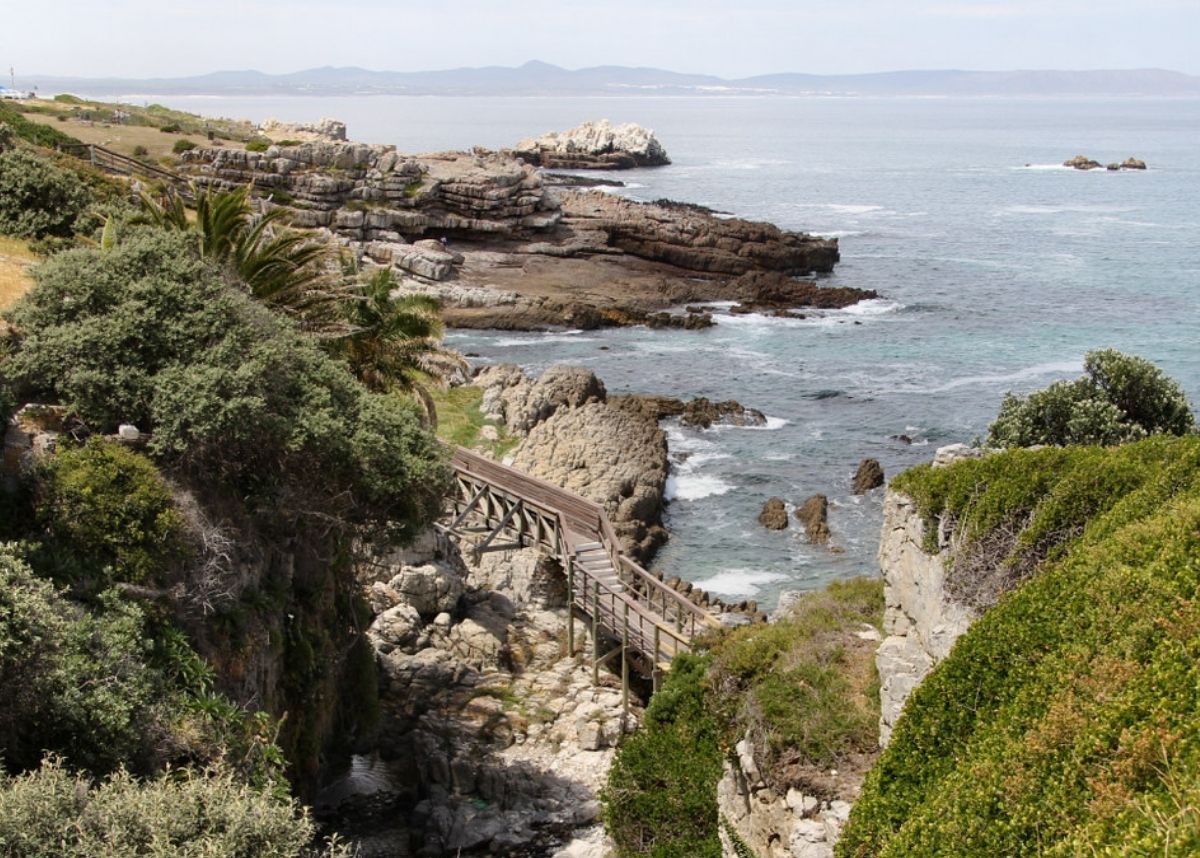
Roman Rock
A popular cliff path section featuring a prominent rock formation and coastal greenery. Ideal for wide-angle shots.
Getting To Hermanus To See Why Whales Come To Hermanus
Hermanus is situated on the southern coast of the Western Cape, approximately 120 kilometers southeast of Cape Town. The most direct approach is by car via the R44 and R43 routes.
N2 highway to R43 (via Botrivier)
R44 coastal route (Clarence Drive)
Private transfer via N2
Check availability
Frequently asked questions about why do whales come to hermanus
Everything you need to know about why do whales come to hermanus